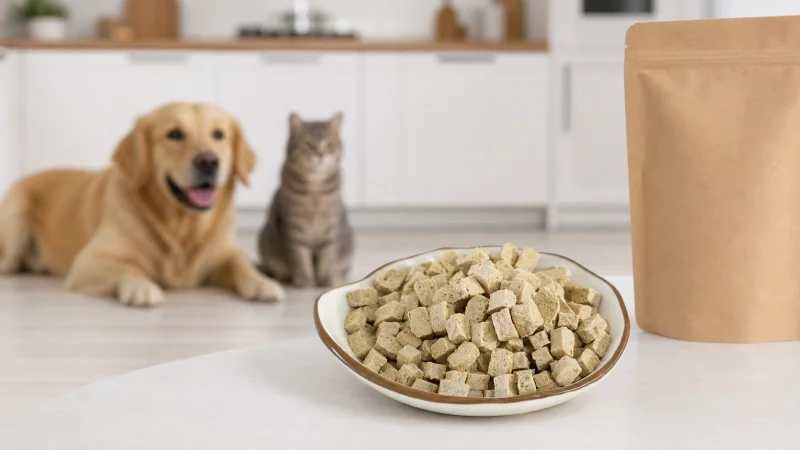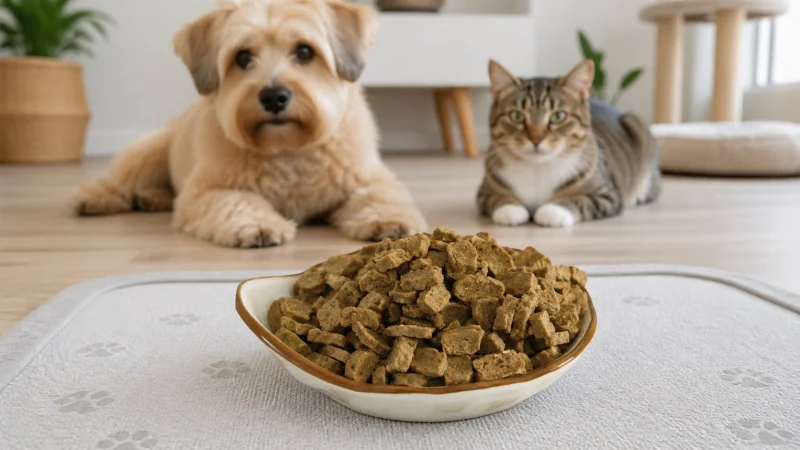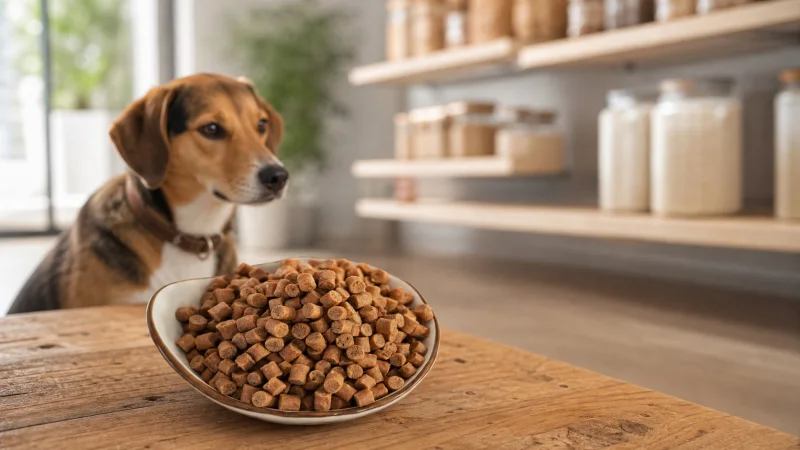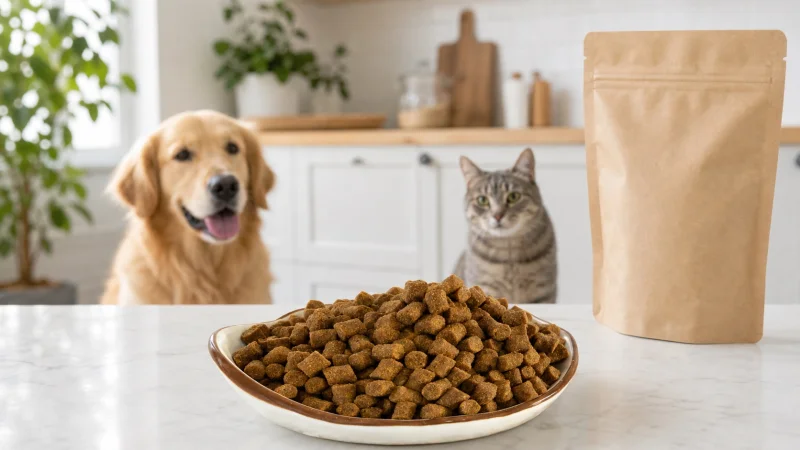
A differentiated pet snack does not need an exaggerated claim to earn a place in a private label range. Pet Snack - Dried Hawthorn Granules is a granular dog and cat snack format for factory wholesale, OEM/ODM supply, and private label packaging. Its listed ingredient direction includes frozen chicken, frozen salmon, chicken meal, corn starch, hawthorn, seafood powder, sodium chloride, and TBHQ. Hawthorn is one part of that multi-ingredient brief; this is not a single-ingredient product, and the final formula and approved market wording should always guide product communication.
For a buyer, the value is a clear SKU story: an irregular granular snack with a botanical ingredient direction that can sit beside meat- or seafood-led treats. This article covers the commercial decisions behind that story, from sample review and pack design to claim control and repeat-order planning. It does not diagnose conditions or promise health outcomes.
Use a botanical ingredient direction to add range variety
Brands often begin their snack range with familiar protein-led formats. A granular product that includes hawthorn can provide a different ingredient cue without requiring the whole range to be rebuilt. It may work in a mixed snack assortment, a larger wholesale offering, or a retail pouch designed around a distinct format and approved ingredient declaration.
Range planning works best when each product remains easy to distinguish. The pet snack category lets buyers compare chunk, granule, and other treat formats. A brand that already uses pigeon pet snack granules, for example, can decide whether a hawthorn-including SKU creates a meaningful difference in its selected ingredient direction, pack design, and sales message instead of merely adding another similar-looking item.
Start with the actual specification, not a marketing shortcut
Hawthorn should not be treated as permission to make unverified therapeutic, digestive, or veterinary claims. The approved ingredient list, guaranteed analysis, feeding guidance, shelf-life documentation, and local feed or pet-food rules set the boundaries for the finished product. The current reference specification lists crude protein at not less than 18%, crude fat at not less than 5%, crude ash at not more than 10%, and moisture at not more than 15%; buyers should confirm the final production specification before printing any label.
- Keep the ingredient statement complete: represent the full multi-ingredient formula rather than promoting the product as only hawthorn.
- Review country requirements early: local rules may affect the product classification, permitted claims, label language, and ingredient declaration.
- Define the product role: agree whether it is a retail reward, a mixed snack-range item, an e-commerce bundle component, or a bulk supply product.
- Lock the approved version: keep the sample, formulation brief, pack material, net weight, and artwork version documented for repeat orders.
Assess the sample as a finished SKU
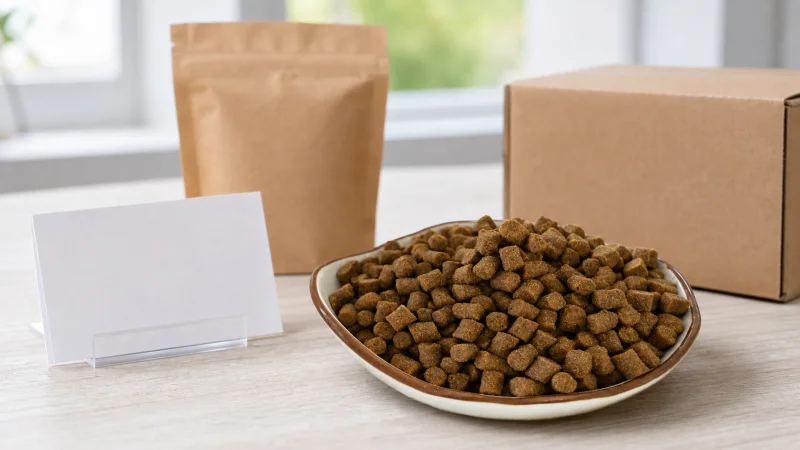
Sample review should cover more than taste and appearance. Buyers should look at granule size and consistency, surface condition, handling in the chosen pouch or container, fill-weight tolerance, storage statement, carton protection, and the information that will appear on the finished label. The sample-review image shows unbranded planning materials only; final packaging should reflect the buyer's market, language, and approved commercial route.
The reference product is available in a 10 kg bulk pack, while private label packaging can be discussed for the intended sales channel. A distributor may need a practical wholesale configuration; a retailer or marketplace brand may need a finished branded pouch or carton. These are different projects even when the selected snack direction is the same.
Build the packaging brief around the actual channel
Before approving print, buyers should define the target species, product form, net weight, ingredient declaration, feeding and storage information, country-specific marks, batch-coding area, carton configuration, and expected reorder volume. The package should explain the product clearly without implying an unapproved benefit. A well-controlled brief also makes it easier for a sales team or marketplace operator to describe the product consistently.
Buyers who want to establish the full food-and-treat mix can compare related formats in the pet food product range. The objective is a coherent first range: enough variation for the buyer's channel, without duplication that makes inventory or product education harder to manage.
Move from sample review to an OEM launch plan
A useful OEM inquiry includes the destination market, selected product direction, pack preference, expected order quantity, desired sales channel, and questions about label or export documentation. Through the OEM and private label process, Xinji Pet Food can coordinate product discussion, samples, packaging, bulk-order planning, and export-oriented preparation. Buyers can also review quality and certifications before moving to a detailed quote.
A practical hawthorn-including granular snack for private label buyers
Pet Snack - Dried Hawthorn Granules offers a distinct granular format and a multi-ingredient direction that includes hawthorn for dog and cat snack ranges. It is a product-planning option, not a substitute for formula, claim, or regulatory review in the destination market. Send Xinji Pet Food your snack brief with your target country, packaging route, and estimated volume to discuss samples, private label packaging, or factory-direct wholesale supply.