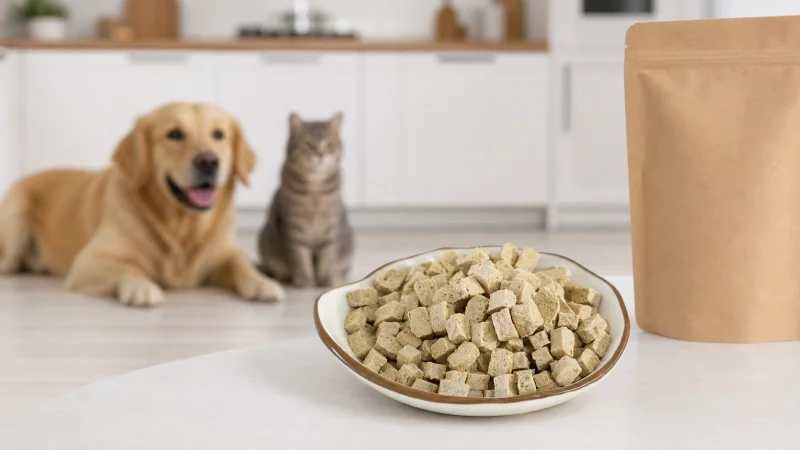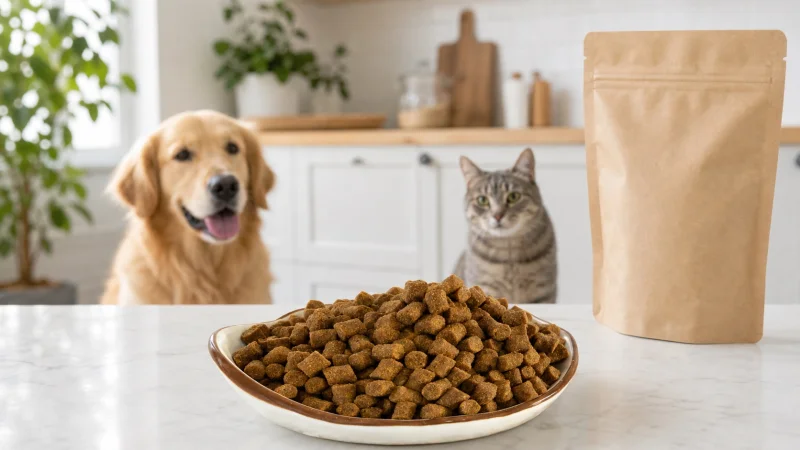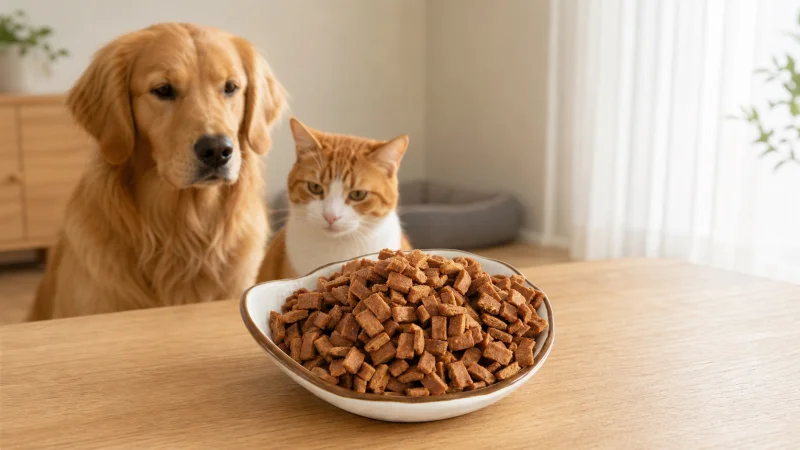
A dog-and-cat snack range does not need every SKU to solve a health problem. Some products earn their place because they are easy to understand, easy to sample, and simple to build into a repeatable retail assortment. Salmon Granules for Dogs & Cats offers that kind of practical direction: a seafood-positioned, small rectangular snack format that can be supplied in bulk and developed for private label packaging.
For importers, pet-shop groups, distributors, and e-commerce brands, the commercial task is to turn a bulk product into a clearly positioned SKU. That means defining the target customer, reviewing the sample, choosing a pack size that suits the channel, and keeping label language accurate for the destination market. This article focuses on the product and range-planning decisions behind that process rather than making broad nutritional promises.
Why salmon granules fit a flexible snack range
Granules create a useful middle ground between a large chew and a fine powder. They can be presented as small reward pieces, a topper-style snack addition where suitable for the brand's feeding direction, or an everyday treat format for households with dogs and cats. Their compact shape also makes them easy to portion for a retail pack, a trial pouch, or a multi-SKU snack bundle.
The existing product uses frozen chicken, frozen salmon, chicken meal, corn starch, seafood powder, sodium chloride, and TBHQ. Its declared guaranteed analysis is crude protein at least 18%, crude fat at least 5%, crude ash no more than 10%, and moisture no more than 15%. A private label buyer should keep this information tied to the approved specification and review all product claims, ingredient wording, feeding guidance, and local registration requirements before sale.
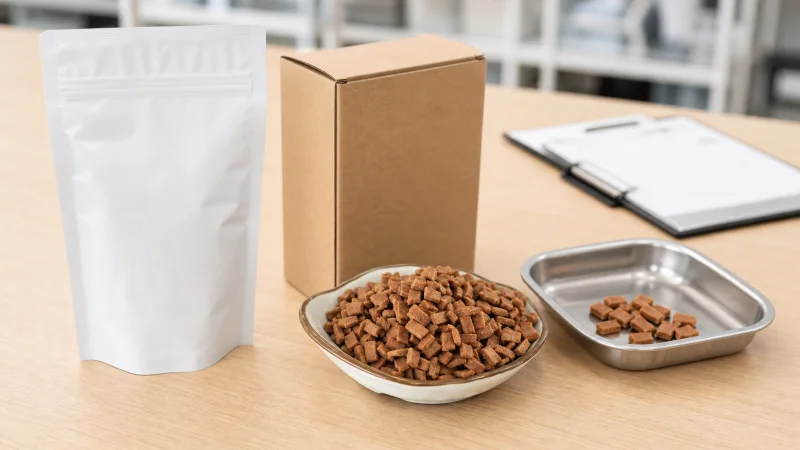
Use format and flavor to make the SKU easy to explain
“Salmon” can be a useful shopper-facing flavor cue, but the buying decision still depends on the full product brief. The snack needs a clear species scope, intended use, texture description, pack weight, storage instructions, and an honest ingredient declaration. A brand should avoid presenting a seafood snack as a treatment, functional supplement, or complete feed unless the approved product specification and applicable regulations support that position.
For buyers planning a wider seafood collection, this product can sit alongside fish granules for dogs and cats as a distinct flavor route rather than a duplicate item. It can also be introduced after a differentiated chunk-format snack. Our earlier guide to krill snack chunks for private label brands shows how a buyer can separate product formats so a range has a clearer visual and commercial structure.
From a 10 kg bulk pack to a retail-ready product
The current factory wholesale specification is a 10 kg bulk pack. That is useful for buyers evaluating product handling, distributor supply, or later repacking plans, but it is not automatically the right consumer-facing format. The retail brief should cover the preferred unit weight, pouch or jar direction, reseal requirement, carton configuration, language versions, shelf-life handling, and the sales channel that will carry the item.
- Pet retail: small pouches or jars can help the product sit beside reward treats and impulse-purchase items.
- E-commerce: pack dimensions, shipping protection, product photography, and a concise feeding message matter before a listing goes live.
- Distributor supply: carton count, barcode readiness, and a reliable reorder brief are as important as the first sample.
- Mixed species assortments: where the approved product and local market rules permit, a dog-and-cat scope can simplify assortment planning for smaller retailers.
What to check during sample review
Sample review should be treated as an operating step, not merely a taste test. Buyers should check granule size and shape, consistency between pieces, aroma, surface condition, handling, product presentation in the intended pack, and the accuracy of the proposed label. Keep the approved specification, analytical information, and shipment documents aligned with the final order. Any feeding or safety direction should be reviewed by the brand's appropriate local technical and regulatory advisers.
These checks are especially important when a private label brand wants to launch more than one snack. A defined approval record gives the buyer a reference for subsequent production, revised artwork, and future replenishment orders.
Plan the private label route before artwork is finalized
A useful inquiry includes the target market, primary sales channel, desired pack size, label languages, product positioning, estimated quantity, and whether the buyer needs bulk supply or finished private label packaging. Through the OEM and private label process, Xinji Pet Food can discuss sample review, packaging coordination, production planning, and export preparation as one connected project.
It is also sensible to review the quality and certification approach early, before the first shipment is scheduled. This helps the buyer align expectations around batch control and export-related documentation rather than treating those items as last-minute requests.
A practical seafood snack direction for buyers
Salmon Granules for Dogs & Cats can be planned as a focused seafood-flavor SKU, a flexible snack format for a mixed-pet assortment, or one part of a wider private label treat program. Xinji Pet Food supports qualified buyers with product discussion, samples, packaging coordination, bulk-order planning, and export-oriented manufacturing. Send us your snack brief with your market, preferred pack, and estimated quantity to discuss the most practical route.