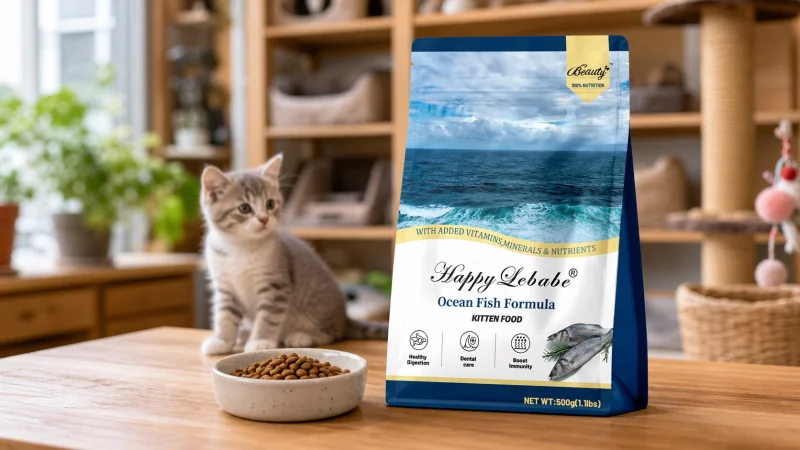
Launching a kitten formula is not simply a matter of using smaller cat-food packaging. For importers and private label brands, an age-stage product needs a clear role in the range, a review process that matches the target market, and packaging that makes the product easy for pet owners to understand. Deep-Sea Fish Formula Cat Food for Kittens offers a focused starting point for buyers who want an ocean-fish-positioned dry food SKU rather than another general adult-cat formula.
The commercial objective is straightforward: build a kitten product that can sit beside adult cat food without confusing the shelf. The final ingredient declaration, nutritional analysis, feeding table, age guidance, and local label claims must be confirmed for the destination market. A good private label launch turns those technical requirements into a product story, a pack format, and a repeatable purchase decision.
Why kitten food should be planned as an age-stage SKU
New cat brands often begin with one adult formula because it seems easier to manage. A kitten option can make the range feel more complete when it is planned with purpose. It gives retailers a clear answer for customers bringing home a young cat, creates a natural next purchase for pet stores, and allows e-commerce brands to build a kitten-focused bundle around food, bowls, grooming, and early-life care.
The product does not need exaggerated claims to be useful. The buyer should define the life-stage positioning, the fish-based product direction, the intended customer, and the price tier. That is more durable than relying on broad marketing language. When the range expands later, an adult comparison product such as Chicken Formula Cat Food for Adult Cats can help create a simple age-stage path on shelf and online.
What buyers should check during sample review
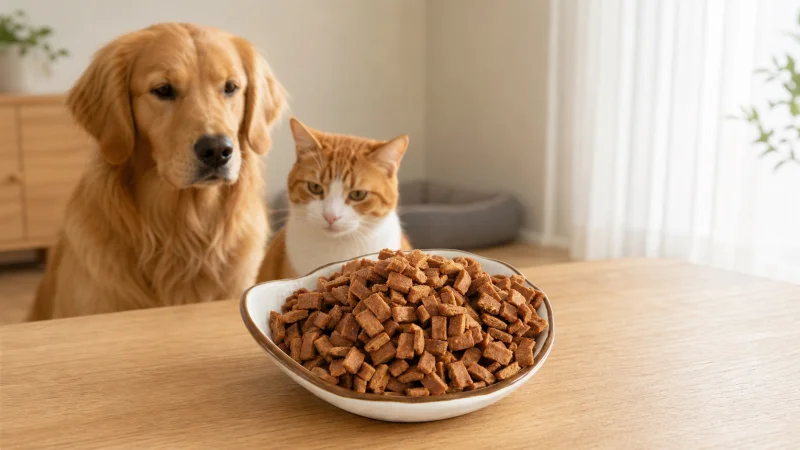
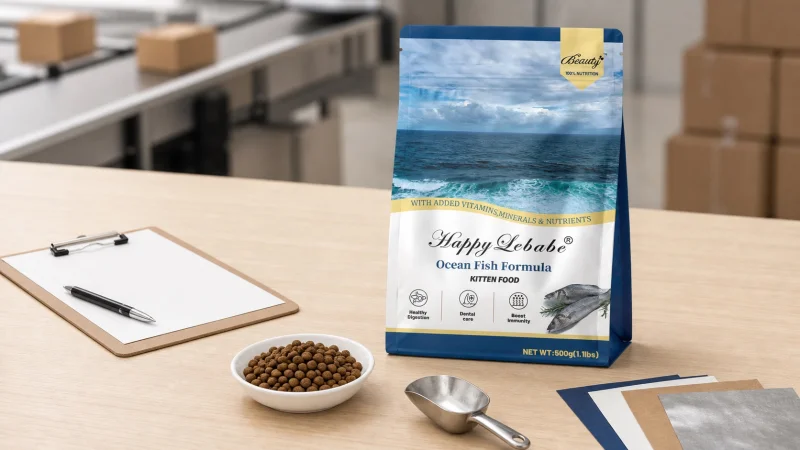
Sample review is where a product brief becomes a practical order. Buyers should look beyond the bag artwork and inspect the dry food as a retail item: kibble appearance, size consistency, aroma, handling, and the way the product presents in a bowl. The review should also compare the intended formula and label documents against the rules of the destination market.
- Age-stage brief: confirm how the product will be presented for kittens and which feeding-stage wording is required locally.
- Formula and documents: review the ingredient declaration, analysis, feeding guide, and any market-specific registration or label requirements with the right local advisors.
- Kibble presentation: check shape, size, color, surface condition, and consistency across the sample.
- Packaging route: decide whether the first launch needs a retail pouch, a larger repeat-purchase pack, or a mix for online and store channels.
- Range position: set the product's place between entry, mid, and premium offerings before finalizing graphics and price.
Build the packaging around the buying channel
A kitten food bag has to work in the channel where it will be sold. A marketplace launch may need a clear front-of-pack age cue, practical pack size, and product photography that makes the kibble and bag easy to inspect. A specialty retailer may need shelf-ready case packing and a clean relationship to the adult-cat range. A distributor may prioritize carton configuration, pallet planning, and a stable reorder program.
These questions should be handled before print approval. Through the OEM and private label process, Xinji Pet Food can discuss the formula direction, packaging route, sample feedback, order quantity, and export preparation as one project rather than as separate decisions made too late.
Plan the first order with the next order in mind
A launch quantity should be large enough to support a coherent channel plan, yet practical enough for the buyer to observe sell-through and refine the next purchase. Before confirming production, agree on the expected reorder rhythm, artwork change process, carton marks, and which product details must remain stable from batch to batch. That preparation is especially useful when a brand expects to add adult cat food, treats, or other life-stage products after the kitten SKU proves its place in the market.
Keep the product story accurate and useful
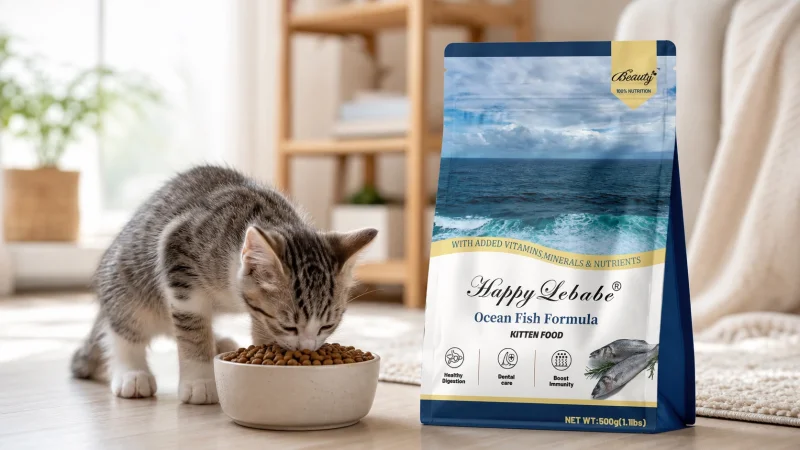
Ocean fish is a clear visual and sensory direction, but the label should say only what the approved formula and destination regulations support. Avoid turning routine nutritional language into disease-treatment promises. Buyers gain more trust by explaining the product's life-stage role, fish-formula direction, pack format, and feeding guidance clearly.
This also makes content easier for sales teams. A retailer can explain why the food is a kitten SKU. An e-commerce brand can show the bag, kibble, and feeding context. A distributor can present a concise range with separate kitten and adult options instead of a group of similar-looking bags.
From first sample to a reliable kitten-food program
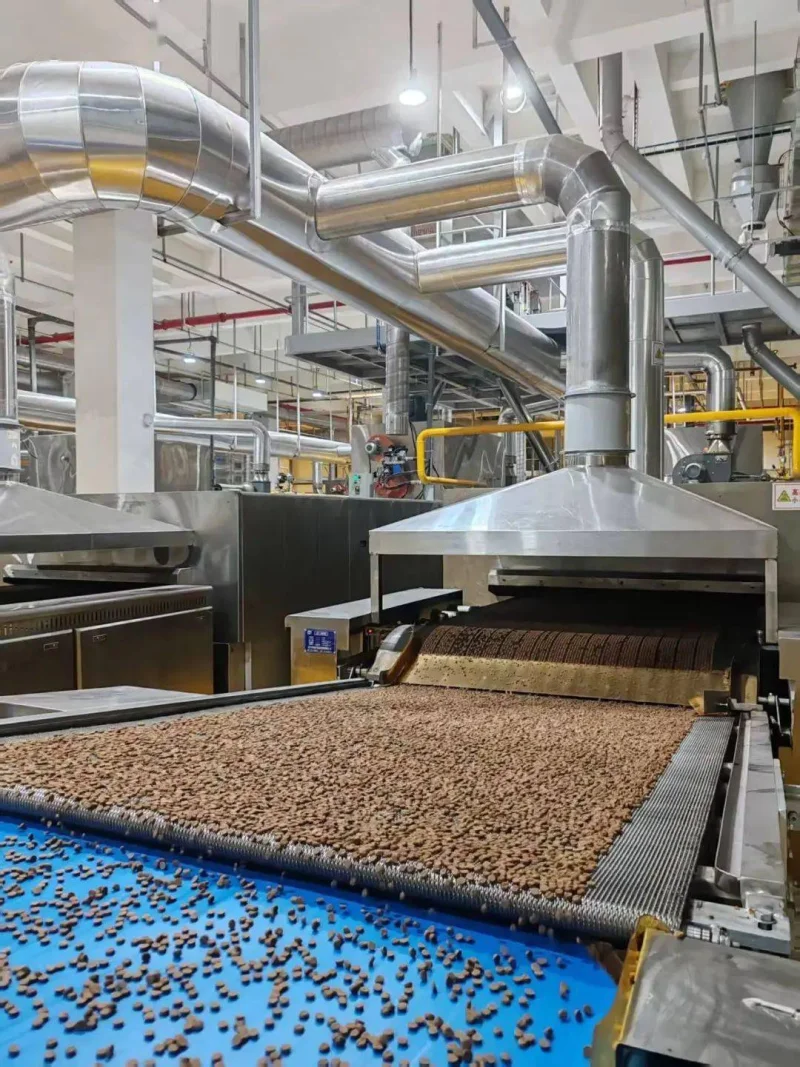
For a first order, the best briefing includes the target country, planned selling channel, intended price band, preferred bag size, expected volume, and any required label language. Buyers who want to see how production, raw-material handling, and batch checks are organized can review the factory workflow before moving from sample approval to production.
Xinji Pet Food supports buyers with product discussion, samples, packaging coordination, bulk order planning, and export-oriented manufacturing. Send us your kitten food brief to discuss whether an ocean-fish formula, bag format, and private label route fit your market plan.