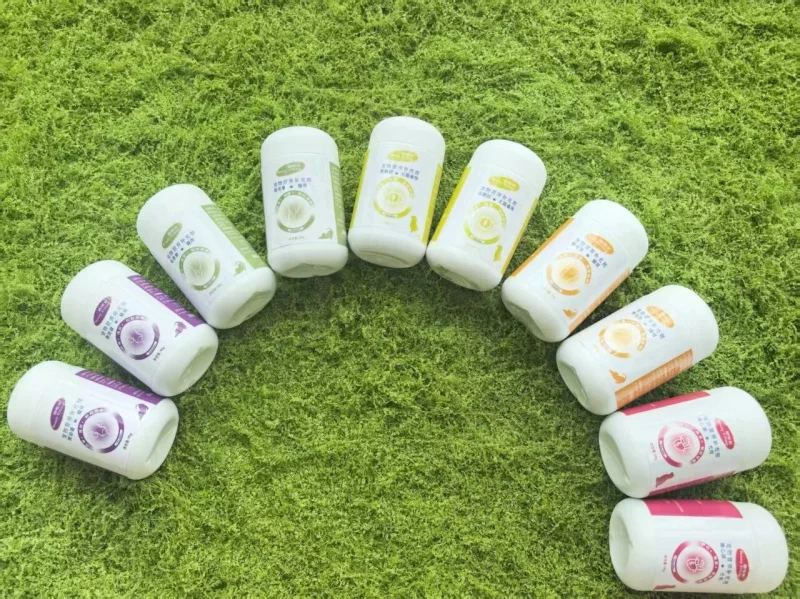
Calming and Stress Support Chewable Supplement for Dogs and Cats, Catalog No. 02, is a compact 20 g chewable direction for brands that want to add a daily routine-change support SKU to a dog and cat wellness range. It is intended for ordinary changes such as travel, a new home, separation, grooming, noise, or a disrupted routine. For buyers, the opportunity is not to make an oversized medical promise. It is to define a clear, responsibly positioned product that fits an existing supplement range and can be sampled, labeled, packed, and reordered consistently.
A calm-support SKU is a planning task, not a medical promise
Pets can react differently to unfamiliar settings and routine changes. A retail product should therefore describe the final formula and intended daily nutritional role accurately, without presenting itself as a treatment for anxiety, a sedative, or a substitute for veterinary assessment. When an animal has persistent, severe, or sudden behavior changes, a veterinarian is the appropriate point of care.
For a buyer, that distinction creates a better brief. The commercial question becomes: which animals and purchasing occasions should the product serve, what is the final formula direction, and which claims can the destination-market label support? That is more useful than selecting a jar first and trying to fit the product story around it later.
Use the 20 g catalog reference as a development brief
The current catalog reference is a chewable supplement for dogs and cats in a 20 g presentation. Its stated formula direction combines sour jujube seed and Poria; Schisandra and lily; tryptophan and casein; and green tea. These components describe the reference direction only. The final ingredient declaration, serving directions, flavor system, claim language, and applicable compliance documents must match the approved commercial batch.
| Reference point | Buyer decision to confirm |
|---|---|
| Dogs & cats | Confirm species statement, serving directions, warnings, and pack communication for the target market. |
| 20 g chewable presentation | Decide the final unit count, jar or pouch format, retail price tier, and whether the format suits trial, travel, or repeat purchase. |
| Botanical and nutritional formula direction | Lock the final formula before artwork so the ingredient list and front-of-pack language remain aligned. |
| Routine-change use occasions | Use specific, non-medical occasions such as travel, grooming, moving, or environmental noise rather than disease claims. |
Make formula, label, and sales story agree
Botanical terms can make a product look distinctive, but they also make approval discipline more important. A distributor sheet, marketplace listing, sales training note, and retail label should all be based on the same approved formula record. Buyers should avoid terms such as “cures anxiety,” “sedative,” “veterinary treatment,” or any ingredient promise that is absent from the final declaration.
This is especially relevant when a brand wants to sell through several channels. A calm-support story that is suitable for a pet store shelf may need different serving guidance, warnings, claim wording, or documentation before it is sold through a veterinary retail group or an export marketplace. Our quality and documentation approach helps connect sample approval, production checks, and the final order file.
Give the SKU a defined place in the range
A compact chewable can work as a daily wellness companion beside digestive, coat, joint, or multivitamin products. It should not compete with every other SKU by repeating broad “all-in-one” language. A useful range plan separates the use occasion, format, price level, and species communication for each item. Buyers can compare this direction with the wider pet health products range before deciding whether a single dog-and-cat SKU or separate species presentations are more practical.
For new brands, the best initial range is often smaller than expected: a clear daily wellness assortment, a coherent pack system, and enough product information for retail staff and e-commerce content. The goal is easy customer understanding and repeatable supply, not the longest possible launch list.

Review the sample in the final commercial context
Product photography is useful for a buyer presentation, but a sample review should go further. Confirm the chew size and appearance, aroma and palatability direction, jar handling, closure performance, label readability, lot and date fields, and the fit between the proposed serving guidance and the net content. If the buyer plans a retail pouch rather than the 20 g jar presentation shown, review the finished pouch sample rather than assuming the product will look or handle the same way.
Keep the decision record practical: approved formula version, approved pack components, proof text, market language, required documents, and the sample reference. This makes reorders and later range extensions more reliable.
OEM and private-label decisions to settle early
For an OEM or private-label project, Xinji Pet Food can review the formula direction, chew format, flavor approach, unit count, net weight, label language, and pack configuration. MOQ is discussed according to the formula and packaging route, and production lead time is confirmed after sample and packaging approval. The OEM/ODM process is designed to turn those decisions into a sample, an approved order brief, production control, and export coordination.
The starting point should be a concise product brief: intended market, sales channel, target species, proposed use occasion, preferred pack, planned order scale, and any claims or documentation questions. Buyers ready to evaluate this direction can send that brief to our team for a practical discussion.