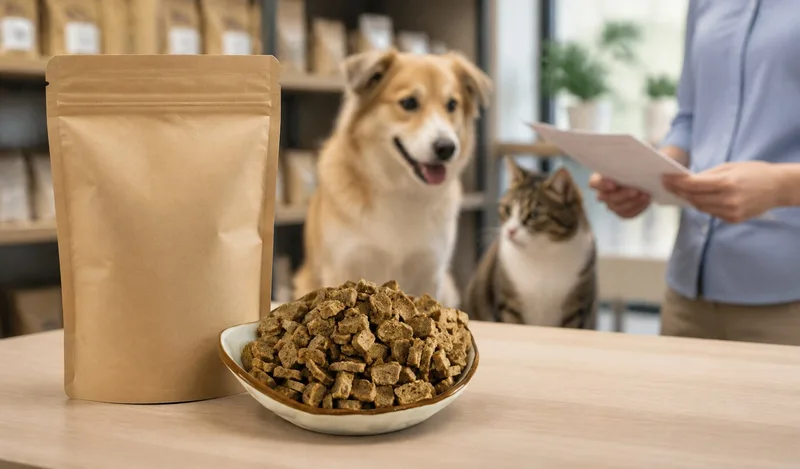
A specialty protein name can attract attention on a pet-treat shelf, but the commercial product must be described as accurately as it is photographed. Venison & Rabbit Pet Snack Granules, model XJ-DF-016, give importers, distributors, and private label brands a distinctive dry snack format for dogs and cats. The reference product is supplied in 10 kg bulk packs, with private label packaging available for qualified orders.
The important detail is ingredient transparency. Although venison and rabbit lead the product name, the current reference ingredient list also includes frozen chicken, frozen salmon, corn starch, and chicken fat. It should therefore be positioned as a multi-protein specialty snack, not as a single-protein, elimination-diet, or hypoallergenic product. This distinction helps brands build a credible sales story and prevents packaging language from promising something the formula does not provide.
Why this granule format can add variety to a pet snack range
Many treat ranges rely on familiar chicken or beef formats. Venison and rabbit create a less common product direction, while the irregular, small granules provide a visual texture that differs from strips, jerky, biscuits, and uniform kibble. For retailers, that difference can help organize a broader snack assortment by protein story, shape, pack size, or price level.
The format can be considered for dog-and-cat snack collections, distributor sample programs, specialty retail assortments, and private label lines that want a recognizable product without immediately developing a complex molded shape. The final species statement, serving guidance, and pack claims must still follow the approved formula and destination-market rules.
Build the product story from the complete formula
The reference ingredient list is frozen chicken, frozen salmon, frozen venison, frozen rabbit, corn starch, and chicken fat. This creates a blended animal-protein direction rather than a single-source product. Brands should disclose the full ingredient list in the correct order required by the destination market and avoid implying that venison or rabbit is the only animal protein.
The reference guaranteed analysis is crude protein at least 40%, crude fat at least 10%, crude ash no more than 8%, moisture no more than 6%, calcium at least 0.8%, and phosphorus at least 0.6%. These are reference specifications for this product direction. Final production specifications, analytical tolerances, test methods, and label declarations must be confirmed during sample and order approval.
Do not confuse a distinctive protein story with a hypoallergenic claim
“Novel protein” is often used loosely in online listings, but it can mean different things depending on the animal's previous diet and the product's full composition. Because this reference formula contains chicken and salmon as well as venison and rabbit, it is not appropriate to market it as a strict novel-protein diet, limited-ingredient diet, or allergy-management product without a separately developed and validated formula.
A safer and more accurate retail direction is “venison and rabbit multi-protein snack granules” or “specialty meat and fish blend.” Clear wording is especially important for veterinary channels, sensitive-pet audiences, and online marketplaces where customers may filter products by protein source. The product is a snack, not a substitute for veterinary diagnosis or a prescribed diet.
Use the 10 kg bulk format to plan more than one sales route
The reference supply format is a 10 kg bulk pack. For some buyers, that supports wholesale distribution or repacking under an approved local system. For private label projects, the commercial pack can be discussed according to target retail price, serving occasion, shelf space, e-commerce shipping, barrier performance, and expected monthly turnover.
Small pouches may support trial and faster rotation, while larger packs can suit repeat purchasers or value-oriented channels. Package material must protect the low-moisture granules during storage and transport. Seal integrity, oxygen and moisture barrier, coding area, label language, and export carton strength should be reviewed before artwork is finalized.
What buyers should check during sample approval
- Appearance: color range, irregular shape, thickness, visible breakage, and consistency across the sample.
- Physical quality: aroma, dryness, surface condition, dust level, and handling inside the proposed package.
- Formula record: complete ingredient list, agreed guaranteed analysis, and any destination-specific restrictions.
- Pack performance: net weight, closure, seal, coding, storage statement, and transport resistance.
- Commercial fit: species, serving direction, sales channel, target price, first-order quantity, and reorder plan.
Sample approval should create a written reference for the first batch and later reorders. It should not be limited to a photo or a brief message saying that the product “looks good.” Our quality and documentation approach helps buyers connect the approved sample with batch checks and export-order records.
Plan private label claims and artwork before printing
The front of the pack should communicate the product format and protein direction without hiding the multi-protein composition. The back panel then needs the complete ingredient declaration, guaranteed analysis, net content, serving guidance, storage instructions, warnings where required, manufacturer or importer details, batch coding, and destination-language information.
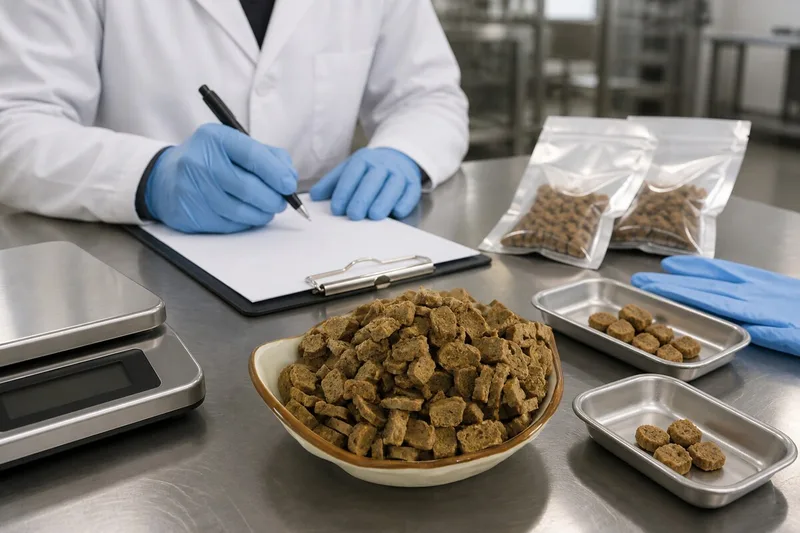
Photography should show the real irregular granules rather than generic round kibble or unrelated meat jerky. The images created for this article were generated from the actual product photograph so the color, shape, thickness, and dry texture remain consistent with the reference sample.
MOQ, lead time, and the information needed for a useful quotation
Factory MOQ is quoted according to the confirmed formula, pack specification, number of SKUs, and total order scope. The reference production lead time is 30–45 days after sample confirmation. Packaging procurement, artwork approval, testing, and destination documentation can change the final schedule.
For a useful quotation, send the destination country, expected monthly or first-order volume, preferred retail pack, channel, target price level, label language, and whether the reference formula will be used or adjusted. Through our OEM and private label process, the formula, sample, packaging, quality reference, and export plan are reviewed as one project.
Where this SKU fits within a broader snack portfolio
Venison and rabbit granules can sit beside familiar proteins or other specialty formats without duplicating them. For comparison, our guide to pigeon pet snack granules explains another multi-protein granule direction. Buyers can use these differences to create a deliberate range rather than changing only the product name on similar packs.
Explore our wider pet food and snack supply range, or send your product brief with the target market, pack size, quantity, and positioning. Xinji Pet Food can support qualified B2B projects with sample review, OEM/ODM production, private label packaging, batch documentation, and export-order planning.