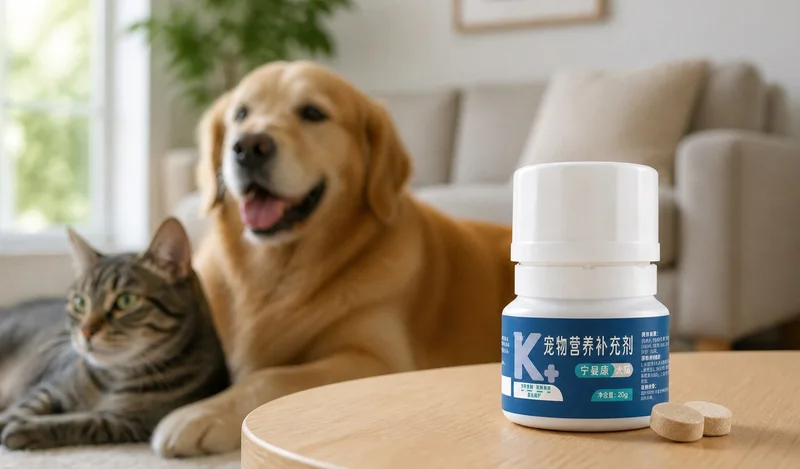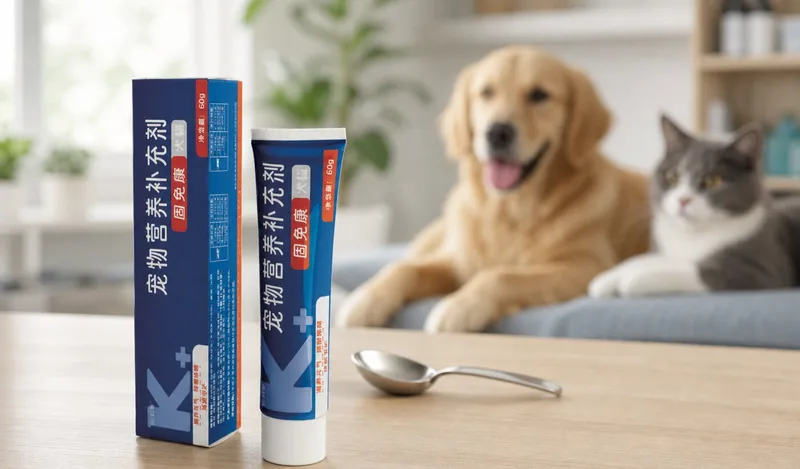
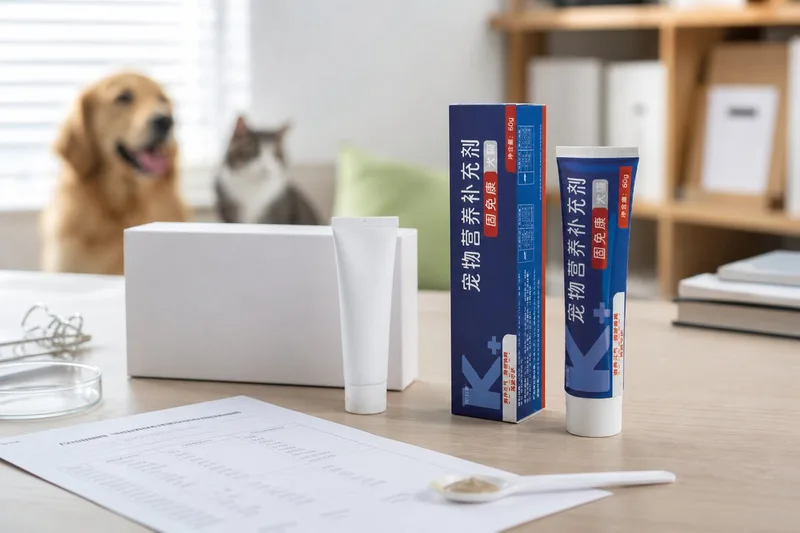
Immune Support Nutritional Paste for Dogs and Cats, Catalog No. 12, is a 60 g paste-format direction for brands building a daily wellness range. For importers, distributors, specialist retailers, and private-label teams, its value is not a broad disease claim. It is a practical product format: easy to serve, easy to explain, and clearly different from a tablet, powder, chew, or dry-food topper.
Why a 60 g paste can earn a specific role in a wellness range
Many supplement ranges are crowded with products that look alike on the shelf. A nutritional paste gives a buyer a different administration route and a different sales conversation. It can suit owners who prefer a measured, direct-serving format and retailers that want a compact, giftable or add-on wellness item. That does not make it a replacement for veterinary diagnosis or treatment. It means the product should be planned as responsible daily nutritional support, with a final label that states exactly what the approved formula can support.
For a new range, the practical question is whether the paste solves a real assortment gap. It may sit beside a probiotic chew or multivitamin product, but it should have its own use occasion, serving guidance, and pack logic rather than repeating an all-purpose claim.
Turn the catalog reference into a commercial brief
The current catalog reference is a 60 g nutritional paste for dogs and cats. Its stated formula direction combines lactoferrin and lysine, Astragalus, and beta-1,3-D-glucan. These components describe the catalog direction, not a finished claim set for every market. Before artwork or marketplace copy is approved, the buyer and factory should lock the final formula, ingredient declaration, serving directions, target species statement, and destination-market label language.
| Catalog reference | Decision for the buyer to confirm |
|---|---|
| Dogs & cats | Confirm whether one shared presentation is appropriate or whether the serving guide, flavor, or pack communication should differ by species. |
| 60 g nutritional paste | Decide the tube, carton, unit count, sales channel, and price tier before the design route is finalized. |
| Lactoferrin, lysine, Astragalus, and beta-glucan direction | Approve the final formula record before any ingredient or wellness wording is placed on a label. |
| Daily immune-maintenance positioning | Use only support language that the final product and destination-market requirements can substantiate; avoid disease prevention or treatment wording. |
Keep the product story accurate across every channel
Immune-related terms require careful commercial discipline. The product page, distributor sheet, retailer training, social post, and marketplace listing should all use the same approved product record. Avoid wording such as “prevents infection,” “antiviral treatment,” “cures illness,” or any claim that goes beyond the final label and applicable regulations. If an animal is unwell or has persistent symptoms, veterinary care is the appropriate next step.
This protects both the buyer and the range. It also makes export work easier because the formula, pack copy, and supporting order documents have a single approved source. Our quality and documentation approach can help buyers structure sample approval, production checks, and the final order file around that source.
Plan the serving experience as carefully as the formula
With a paste format, the customer experience begins before the first serving. The tube needs to dispense cleanly, the cap needs to close reliably, the net content needs to be clear, and the instructions need to be understandable in the market language. A brand should decide whether the serving story is direct administration, mixing with food, or another approved route, then confirm that the final formula and label support it.
That operational detail gives the SKU a more distinct place within the wider pet health products range. A buyer can compare it with soft chews, oral liquids, and other nutrition formats without making the range unnecessarily repetitive.
Review the finished sample, not only the ingredient list
A good OEM review combines product and packaging checks. Confirm paste appearance and aroma, tube squeeze feel, cap and seal performance, carton protection, print readability, lot and date fields, label language, and the way the unit will be presented online or at retail. If the planned private-label route uses a different tube, carton, or display configuration, review a representative finished sample rather than relying only on a digital design file.
Keep the approved formula version, artwork proof, packaging components, required documents, and sample reference together in the order brief. That makes a later reorder, market adaptation, or related SKU extension much more controlled.
Make the OEM decision set clear before production
Xinji Pet Food can discuss formula direction, flavor, net weight, tube and carton configuration, label language, and private-label presentation. MOQ depends on the final formula and packaging route, while production lead time is confirmed after sample and packaging approval. The OEM/ODM process connects those decisions with sampling, order approval, production control, and export coordination.
A useful first brief includes the destination market, customer channel, preferred price position, target species, planned pack style, expected order scale, and any questions about label wording or documentation. Buyers evaluating this 60 g paste direction can send that brief to our team for a practical discussion.