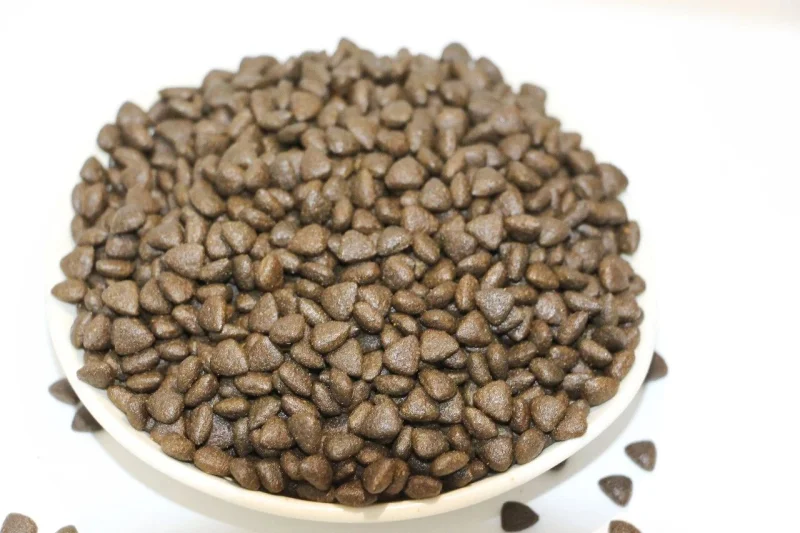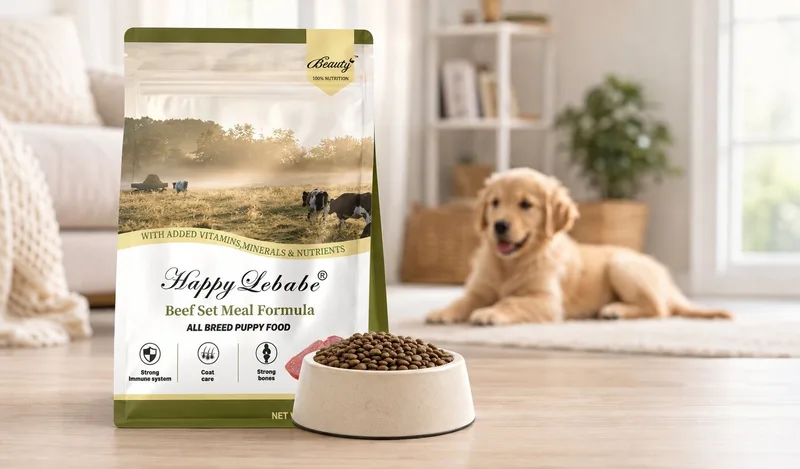
Beef Formula Dog Food (Puppies), model XJ-DF-004, is a dry-kibble reference for buyers building a puppy food line through factory wholesale, OEM, ODM, or private label. A good puppy SKU should not be treated as an adult-food bag with a different front panel. The formula reference, nutritional targets, kibble presentation, pack size, label language, and first-order plan need to work together before a buyer starts selling it.
Build the puppy brief before choosing the bag design
Puppy positioning usually creates more buyer questions than an adult maintenance line: life-stage wording, feeding guidance, kibble suitability, price tier, and how the product sits beside adult and senior ranges. The most practical starting point is a short, controlled brief rather than a long list of vague “premium” claims. Define the target market, intended sales channel, desired retail price band, planned pack sizes, and what information the final label must communicate.
That brief helps a buyer compare this product with the wider dry dog food range and decide whether a beef-led puppy recipe fills a real portfolio gap. It also prevents a new brand from creating two nearly identical products that confuse retail staff and online customers.
Use the current formula as a reference, then lock the final commercial specification
The published reference lists beef bone meal, chicken meal, corn, rice, corn gluten meal, chicken fat, corn germ meal, beet pulp, pet-feed compound seasoning, calcium hydrogen phosphate, DL-methionine, L-lysine, choline chloride, sodium chloride, trace elements, and vitamins. Its stated guaranteed analysis is crude protein at least 24%, crude fat at least 11%, moisture no more than 10%, crude ash no more than 10%, crude fiber no more than 5%, calcium at least 0.5%, and water-soluble chloride at least 0.09%.
Those figures are a product reference, not a substitute for an approved order specification. Before production, the final ingredient declaration, guaranteed analysis, feeding guidance, label claims, and any destination-market registrations must be confirmed for the actual formula and package selected for the order.
| Reference point | Buyer decision to settle |
|---|---|
| Beef-led puppy dry kibble | Confirm the final market-facing product name and the role it plays beside adult, small-breed, or value-tier products. |
| Protein and fat reference | Align the guaranteed analysis on the final label with the approved batch specification and local requirements. |
| Kibble and palatability direction | Review the physical sample, aroma, appearance, and feeding experience rather than relying only on a digital brief. |
| Factory wholesale or private label | Choose the pack configuration, label language, order scale, and documentation route before the artwork is finalized. |
Make the puppy story accurate instead of over-claiming
Young-dog products are often marketed with broad promises about immunity, bones, intelligence, or development. Those claims should not be copied from a generic pack or sales presentation. Each claim, ingredient statement, and feeding instruction must be supported by the final formula, approved label, and destination-market rules. Product communication should never imply that a food treats disease or replaces veterinary advice.
This discipline also protects the commercial workflow. A distributor sheet, marketplace listing, retail training note, and carton artwork should be based on one approved product record. Our quality and documentation approach helps buyers connect sample confirmation, production checks, and the final order file without allowing unapproved claims to drift into the public description.
Plan formats for the channel, not only for the factory line
The same dry recipe can be presented very differently for a specialist pet shop, a value-oriented distributor, or an e-commerce launch. A buyer should decide the initial bag size, outer-carton count, shelf presentation, product photography needs, label languages, and expected reorder pattern. For a bulk-oriented project, the relevant route may be different again; our bulk pet food supply page outlines the information needed to discuss higher-volume procurement.
Starting with a smaller, well-defined product line often creates better results than launching too many puppy flavors at once. One clear puppy product, an adult counterpart where appropriate, and a coherent packaging system can be easier to explain, list, stock, and reorder.
Review the physical sample in its final selling context
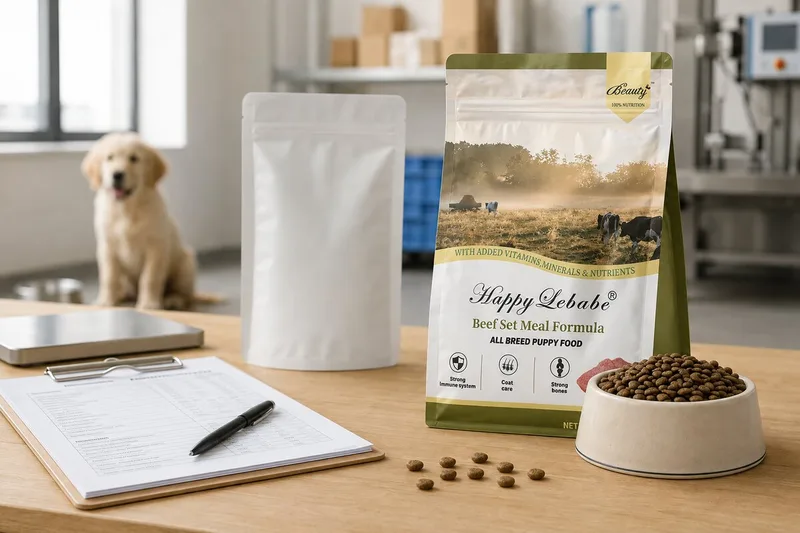
Sample review should cover more than the ingredient list. Confirm kibble shape and consistency, aroma and appearance, bag material and closure, print readability, net weight, lot and date fields, shipping-carton protection, and the way the product will appear on a product page or store shelf. If the final project uses a different bag or artwork from the catalog reference, review the representative finished pack before the order is released.
Maintain an order brief with the approved formula version, label proof, packaging components, sample reference, required documents, and inspection points. That record makes the first production order clearer and makes later reorders or extensions to the range more reliable.
From puppy SKU brief to an OEM order
Xinji Pet Food can discuss dry-kibble formula direction, packaging, label language, private-label presentation, sample requirements, and export documentation. MOQ is available on request, while the current reference lead time is 30-45 days after sample confirmation. The OEM/ODM process turns a defined buyer brief into sampling, packaging approval, production control, and export coordination.
To begin, share the destination market, channel, target price position, estimated volume, preferred pack size, and any label or document requirements. Buyers ready to assess this puppy-kibble direction can send those details to our team for a practical discussion.