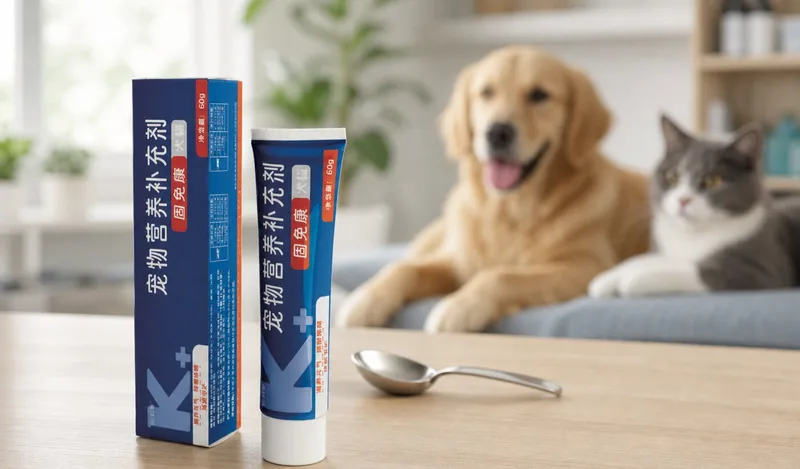
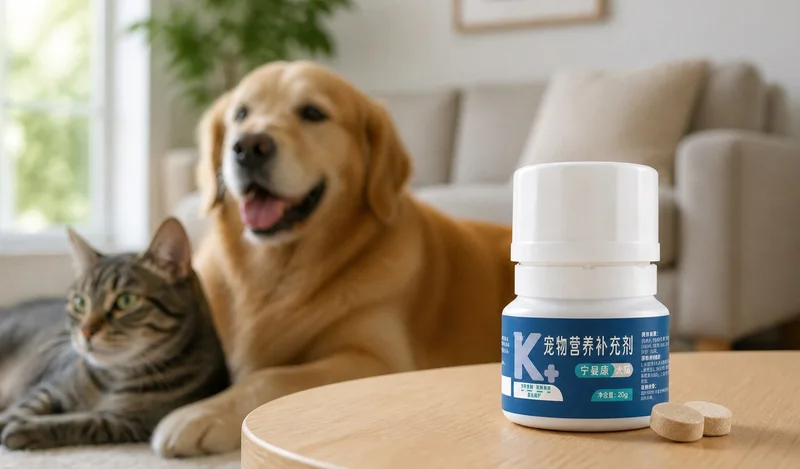
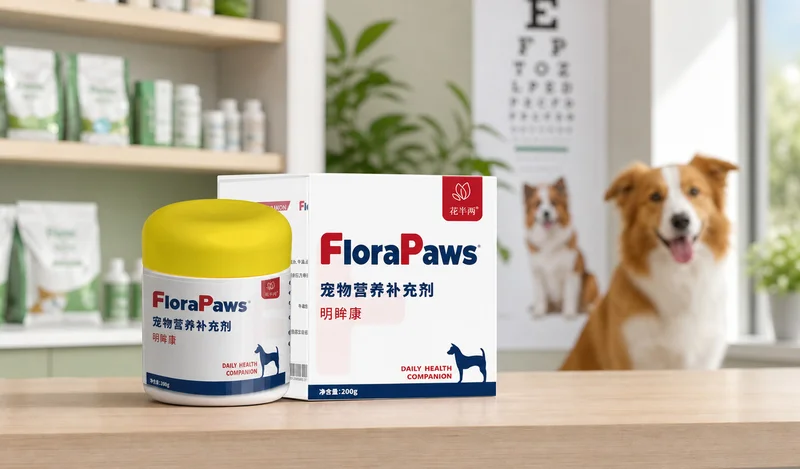
Cat weight management is not solved by adding one supplement to an unchanged feeding routine. For a private label brand, the more responsible opportunity is to create a product that fits into measurable daily care: appropriate food portions, controlled treats, regular play, periodic body-condition checks, and veterinary advice when a cat gains or loses weight unexpectedly.
Xinji Pet Food's Cat Weight Management Support Soft Chews, model XJ-HS-011, provide a starting formula direction for that type of wellness program. The published ingredient list includes L-carnitine, fish oil, pumpkin, psyllium, probiotics, and herbal extracts. Available net-content references are 90g and 200g, with OEM/ODM and private label packaging options for qualified wholesale projects.
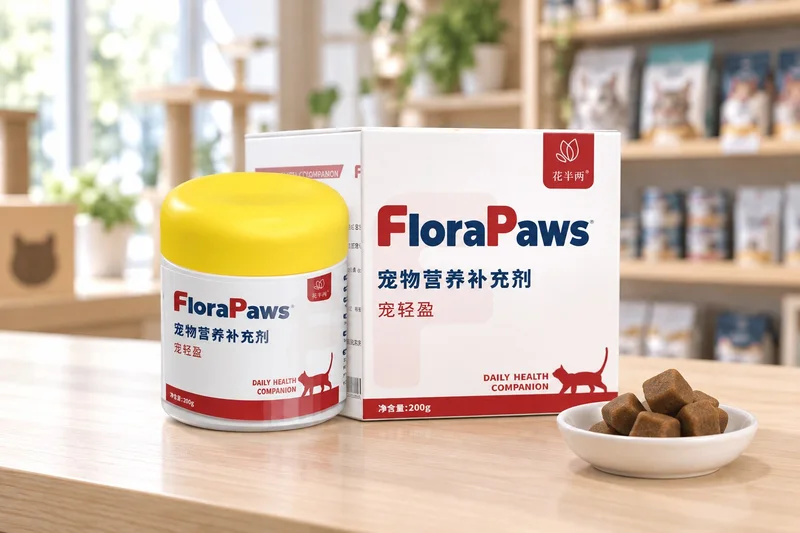
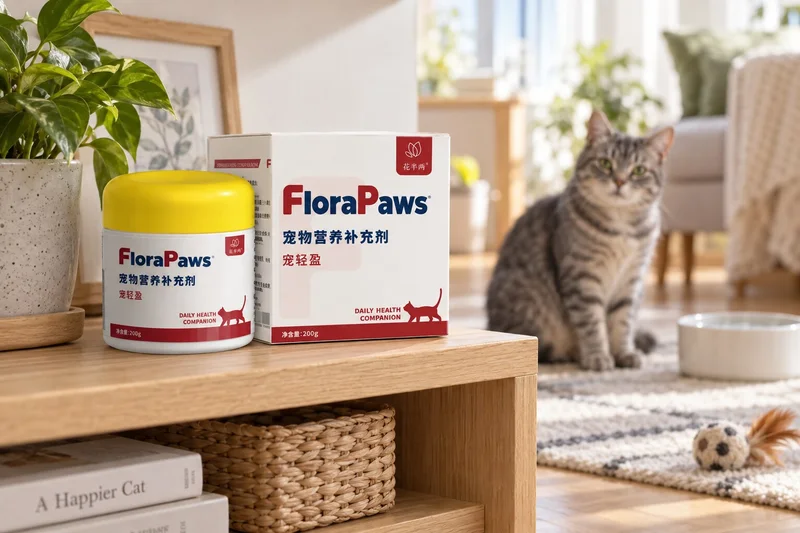
AI-generated retail setting based on the original product photograph. The shown 200g FloraPaws package is preserved from the reference image; the dish is illustrative and does not represent a serving recommendation.
Define the product's role before writing weight-loss claims
A cat weight-support SKU should be described as part of a daily wellness routine, not as a treatment for obesity, diabetes, thyroid disease, joint disease, or another veterinary condition. A supplement cannot replace a complete and balanced diet, an appropriate calorie plan, movement, or professional assessment.
The reference formula can support a buyer's discussion around body-condition maintenance, fiber-oriented positioning, digestive routine, and active-lifestyle support. It does not establish how much weight a cat will lose, how quickly results will appear, or whether the product is suitable for a particular medical case. Those promises should not be added to the label, marketplace listing, or advertising.
For comparison, our dog weight management soft-chew guide covers a related ingredient direction for dogs. A feline product needs its own flavor review, piece size, feeding instructions, label language, and customer education rather than a dog formula story with the species name changed.
What the published ingredient direction does and does not tell buyers
| Reference element | What a buyer should confirm |
|---|---|
| L-carnitine | Final inclusion level, specification, and compliant label wording for the destination market. |
| Fish oil | Source, quality specification, oxidation controls, and how it affects flavor and stability. |
| Pumpkin and psyllium | Fiber contribution, texture, finished-piece consistency, and the role allowed on the label. |
| Probiotics | Organism or strain identity, target amount, stability through production, and end-of-shelf-life declaration if required. |
| Herbal extracts | Exact botanical names, plant parts, extract specifications, amounts, and market suitability. |
The public page provides an ingredient direction, not a complete quantitative formula. It does not publish calories per chew, exact active amounts, probiotic strains, herbal identities, guaranteed analysis, or a feeding dose. These details must come from the approved order specification and final label review. Buyers should not borrow numbers from another product.
Soft chews still need a feline acceptance plan
Cats can be selective about aroma, texture, and unfamiliar formats. A soft chew that works commercially should be assessed with the intended cat population rather than assumed to be accepted because it resembles a treat. During sample review, record piece dimensions, weight variation, firmness, aroma, surface condition, and whether the piece can be divided as intended without excessive crumbling.
A palatability check should use a defined method and enough observations to be meaningful. Note whether cats approach, lick, partially consume, or fully consume the sample, and whether it was offered alone or with food. A small informal test can guide development, but it is not proof that “all cats love it.” Finished marketing language should stay within the evidence available.
If the product is supplied in different pack sizes, confirm that the same formula, piece count, serving directions, and storage instructions are correctly reflected on each label. The 90g and 200g references describe available net-content directions; they do not by themselves establish the number of chews or days of use.
AI-generated home setting based on the original product image. It illustrates the product's daily-care context and is not a customer testimonial, veterinary recommendation, dosage guide, or before-and-after claim.
Connect the supplement to a realistic owner routine
Useful customer education can explain that owners should measure the cat's regular food and treats, provide play opportunities appropriate to the cat, and monitor changes over time. Body weight is one data point; body-condition score and muscle condition can also matter. A veterinarian should assess unexplained weight change, appetite change, lethargy, vomiting, diarrhea, or other health concerns.
The soft chew should also be counted within the cat's overall daily intake. Until the final formula's calorie content and serving guidance are confirmed, a brand should not call the chew “low calorie” or state that it can replace food. Clear directions, cautions, and storage information are more useful than dramatic promises.
This routine-based approach creates better content for pet stores and e-commerce pages: how to establish a consistent schedule, how to introduce a new chew, what information to record, and when to seek professional advice. It positions the SKU as one part of responsible care rather than a shortcut.
Plan packaging around stability and correct use
The product page lists private label bottle, jar, tube, carton, and pouch options. The chosen system should protect the chew's texture and aroma while giving enough space for the ingredient statement, net content, lot identification, expiry or best-before information, storage instructions, serving directions, cautions, and importer details required in the target market.
Fish oil, probiotics, and botanical ingredients make product-specific stability questions important. Ask how the finished formula and package are evaluated, what shelf life is supported, and whether a desiccant, induction seal, or other protection is appropriate. Packaging decisions must follow the actual stability work; a container style alone does not prove shelf life.
Our broader guide to building a private label pet supplement line explains how formula, pack format, MOQ, documentation, and repeat ordering fit together. For this cat SKU, the retail story should remain focused enough that staff and customers can understand its role without confusing it with a complete diet or medicine.
Prepare an OEM brief that can be reviewed properly
Send the factory your destination country, sales channel, target net content, expected order quantity, preferred package type, desired piece size, flavor direction, and planned claims. State whether the reference ingredient direction is acceptable or whether specific inclusions, exclusions, or probiotic requirements must be evaluated.
During the OEM/ODM process, confirm the final formula, specification, serving directions, sample-approval criteria, package artwork, MOQ, lead time, batch checks, and export documentation. Review the product-specific answers alongside Xinji Pet Food's quality and certification information; a general factory credential does not replace the approved specification for the item being ordered.
Request the current specification and sample route
To evaluate XJ-HS-011 for a feline wellness range, send Xinji Pet Food your target market, pack size, order volume, and positioning brief. We can then discuss the applicable formula, sample arrangements, private label packaging, and documentation without turning a daily wellness product into an unsupported medical promise.